Friday, June 01, 2007

Good gravy I hope that tail fin was larger when it was alive...


Here is the dead pufferfish I was telling you about! It's actually called a spiny boxfish. It's about 6 inches long. It was quite stinky, and I nicked myself with a spine. :(

Fish backbone piece


Here is a tiny fish vertebrae. It was about a centimeter long. Fish bones are not that common on South Beach, where I went, but are quite plentiful on the beach near Harbor Town. There are many large bones there, and I'm assuming that's because people go and fish, then come back and clean their fish on the docks, and throw the carcasses over the railing. The carcasses are eaten by crabs, and the skeletons wash up on the beach. At least that's how I see it. :)

Limpet.


Here is a limpet shell. Have you ever heard the phrase, "cling like a limpet"? That's what limpets do. They cling onto other shells for transportation and shelter. Notice how this one is curved. It probably lived in some whelk or moon snail shell as a very small limpet, and grew larger and larger, and curved as the shell was curved, to accommodate its tight lodging. And yes, my fingernails need trimming.

Misc. II


Here are some miscellaneous shells and a fuzzy caterpillar. The only one I could recognize is the one second to the bottom. That one is a broken Olive shell, (South Carolina's state shell), with a little star coral attached.

Some broken shell


I had a hard time identifying this. It's either a Knobbed Whelk or some kind of conch. Probably a knobbed whelk. By the way, there is a way to help identify these things. There are two main kinds of whelks around here, knobbed whelks, and lightning whelks. If you turn some unknown whelk on its "back", then you will see the opening is on a particular side. Knobbed Whelks have the opening on the right side, while Lighting Whelks have it on the left. See how that eliminates Lightning Whelks as a candidate for this shells' identification? Hope that makes that clear. As I've said, I'm bad at condensing. Just type in knobbed or lightning whelk in the google image search engine, and you'll see what I mean. :)
P.s. I pronounce it conch, like a Northerner. Not conk. (It can be pronounced either way.)

Misc.


Here's some miscellanous feather from some seabird I found.

Star Coral


This is, (in case the title didn't give you a hint), star coral. It is also known as Astrangia, and personally, it's one of my favorite things to find on the beach. It's Hilton Head's only stony coral, (stony as in not brittle or soft, and rocklike instead.) There are very often chunks of it scattered along the beach, and I've never found any alive with polyps. (Polyps are the little creatures that live in those pretty cavities.) If you decorate your house with shells and other ocean things, star coral looks very attractive in a small bowl or other piece of glassware.

Spider crabs


And here we have Spider Crabs! They're about 1-2 inches long, but some can grow up to 3 inches, mabye a bit longer. These crabs are unique because they grow gardens on their backs! On all these photos, you see stringy brown stuff, a little goop, and sand. (The sand wasn't supposed to be there.) These crabs collect ooze, bacteria, and plankton on their rough, spiny shells. The gooey mess attracts other plants and animals. Some of these are seaweed, sponge, tube worms, hydroids, and bryzoans. Interesting! The crabs will even snip off plants from the ocean floor, put them to their mouth, coating the organism with gluey mucus, and sticks it to their backs! 8) Wierd...

Tuesday, May 22, 2007

Moon snail


Some locals call these Tiger Eyes. I prefer to call them by their real name: Moon Snails. These are some of the most common shells I've found on the beach.
Moon Snails are carnivorous, tracking down their prey and drilling a hole through the poor animal, (usually another mollusks, and even other moon snails), with its tubular proboscis. (A proboscis is sort of like an elephant's trunk.) This explains all of those shells on the beach with a several-millimeter-wide hole in them, as well as Moon Snails themselves, since they're cannibalistic.
Oh, and one other thing. Have you ever seen those wierd sandy-colored collar-like things on the beach? At this time of year there are tons of them. Those are Moon Snail eggs. The exact recipe is Moon Snail slime, eggs, and a whole lot of sand. These collars dry out on the beach and crumble, and then high tide takes them back in. :)

Let's begin with...


...A pen shell! This one is around seven inches. These are mollusks related to mussels, and they live in soft, sandy mud. They don't dig or burrow in the mud, they grab their food.They anchor themselves by using their small "foot" to excrete out sturdy thin "byssus" threads. Byssus threads are what mussels and such use to anchor themselves as well. These threads are so sturdy that the romans spun them into clothing! Would you like to go around wearing a mollusk's excretion? Ew. :S

All in a day's beachcombing...


Ah. All in a day's beachcombing. (You're going to be so sick of that blue mat once I'm finished...) :)'
NOTE: All of the creatures, shells, etc. were dead when I found them. On Hilton Head it is against the law to take living things away from the beach, ie. live sand dollars, hermit crabs, starfish, etc. And you can't kill them so you can bring them back dead with you. (But you probably already knew that.)

Grand RE-opening!


Whew! I finally decided to clear away the cobwebs and start fresh! And what a way to start then by me giving you detailed descriptions of a dead pufferfish and a skate fetus? I mean honestly? ;)'

Thursday, June 01, 2006

Linus!


For the last two and a half weeks, A small gator has been swimming around in our back lagoon. We've named him Linus, after the Charlie Brown character!

Sunday, April 02, 2006

Green Tree Frog


Here's a photo of a Green Tree Frog. This photo shows it a bit browner than it is, but you can easily tell it is a Green Tree Frog. This frog is fairly common, it can be found in swamps, borders of lakes and bayous, on floating vegetation, in trees and bushes near water, in Spanish moss or under bark on trees, and any place well supplied with water or dampness. At night they can be found clinging to house windows or windowsills preying on insects attracted by the artificial light. At night in May right through July, they can be heard easily with their little voices trilling what some people describe to sound like "quenk, quenk", sort of like cowbells. Froggie love songs! I myself have never heard the frogs, but next month is May, so I will be listening! They have some other nicknames, such as Cowbell Frog, Bell Frog, and Fried Bacon Frog! Weird, huh! :)' They are the Louisiana State Amphibian, and their latin name is Hyla Cinerea. They eat all sorts of bugs, like crickets and moths, worms, and small grasshoppers, among other things. Did you know that Kermit the Frog was modeled after a Green Tree Frog?

Monday, January 30, 2006

Eastern Gray Squirrel


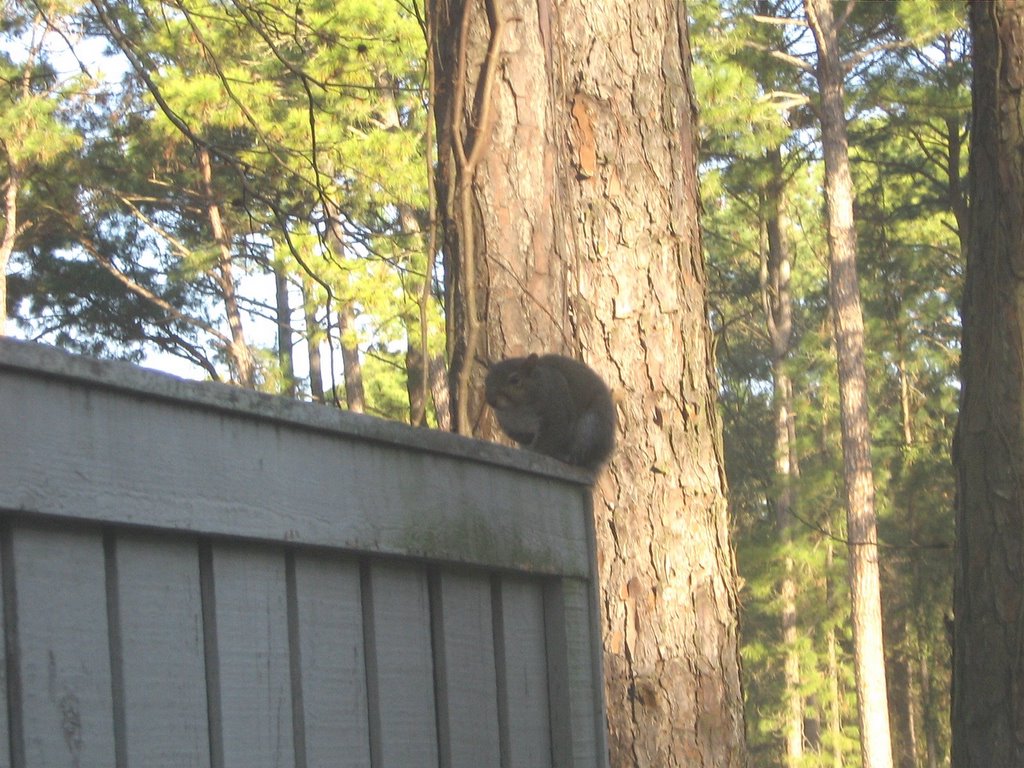
Here is another photo of a squirrel, presumably the same on in the picture below. The ledge the squirrel is standing on is hollow, and a hole has been chewed in it. A family of at least four squirrels lives in the hole. If you look at the ledge closely, you see places where the squirrels chewed to try to widen the opening. A few moments before I took this photo, another one peeped its head through the gnawed hole. It was really cute! Have you seen any squirrels living in strange places? If so, please comment.

Sunday, January 29, 2006

Squirrel Sitings


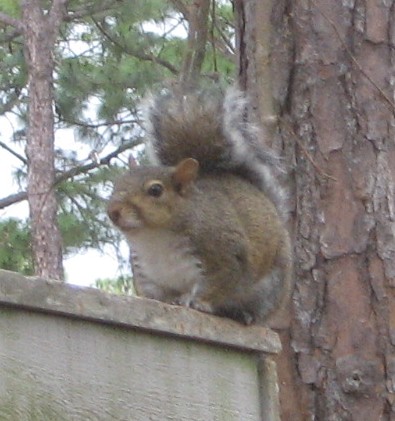
Here is a photo of an Eastern Gray Squirrel. Sorry, this photo is not very good.This one looks like it has been stocking up for the winter! :)' For a cool website concerning this kind of squirrel, click.

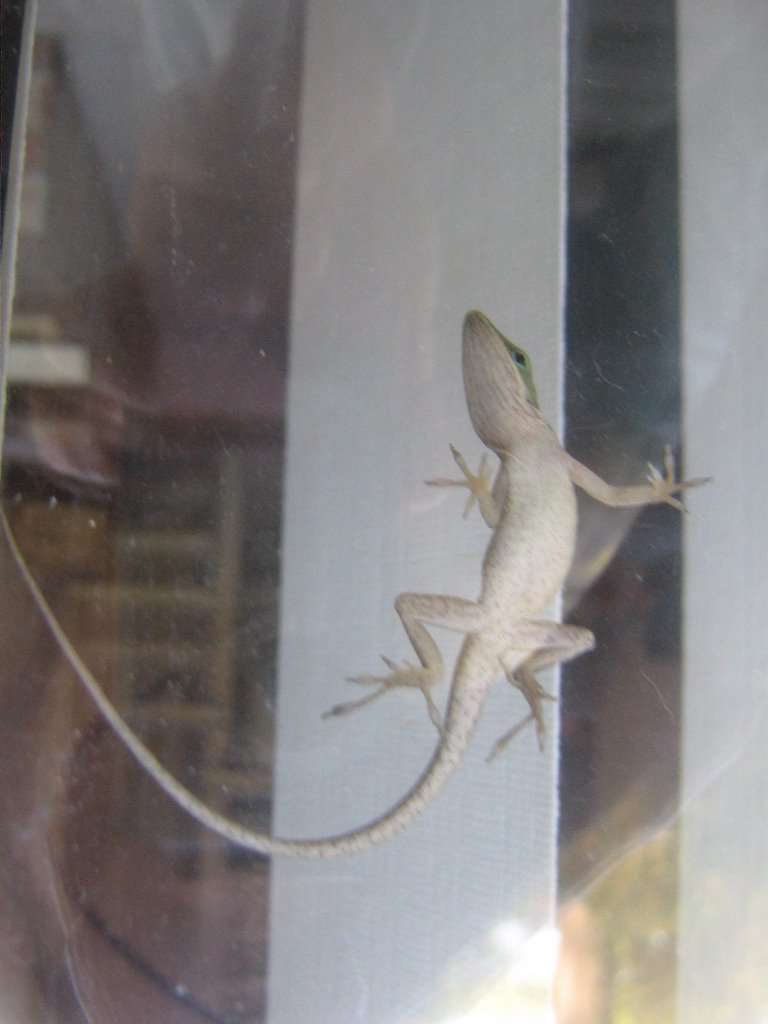
Anoles in my house! 2


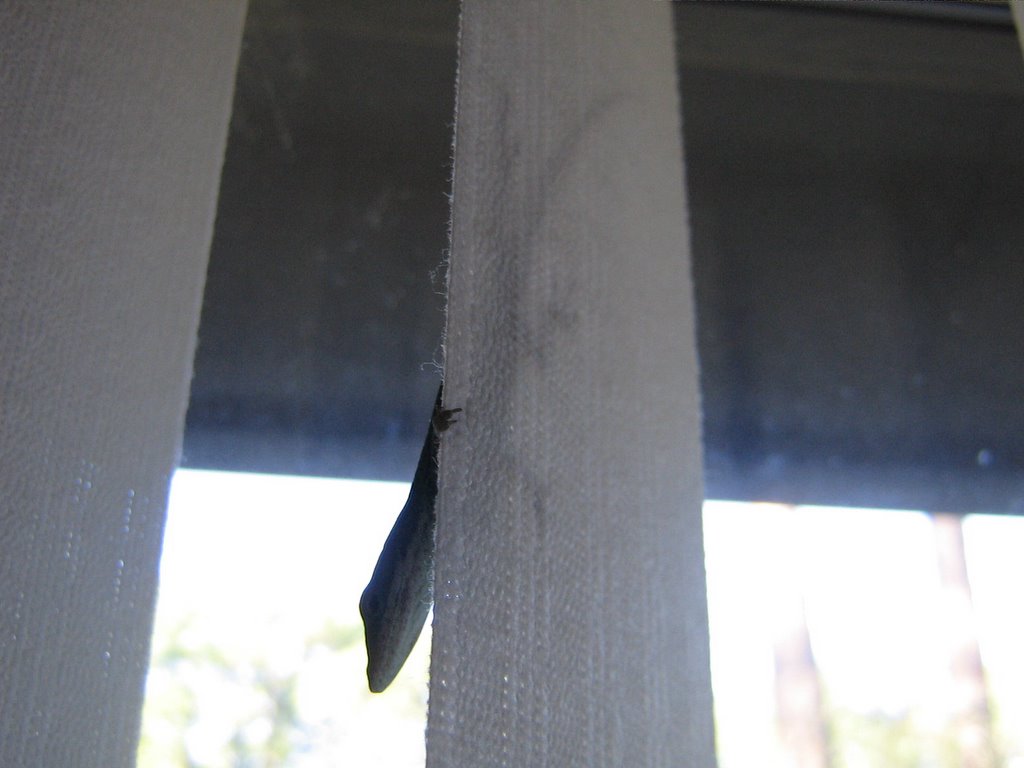
Here is the other one. This isn't a very good photo, though :(

Anoles in my house!


A few days ago I noticed an anole crawling up our curtain things. When I got closer, I saw there were two of them!

Thursday, January 12, 2006

Carolina Anole


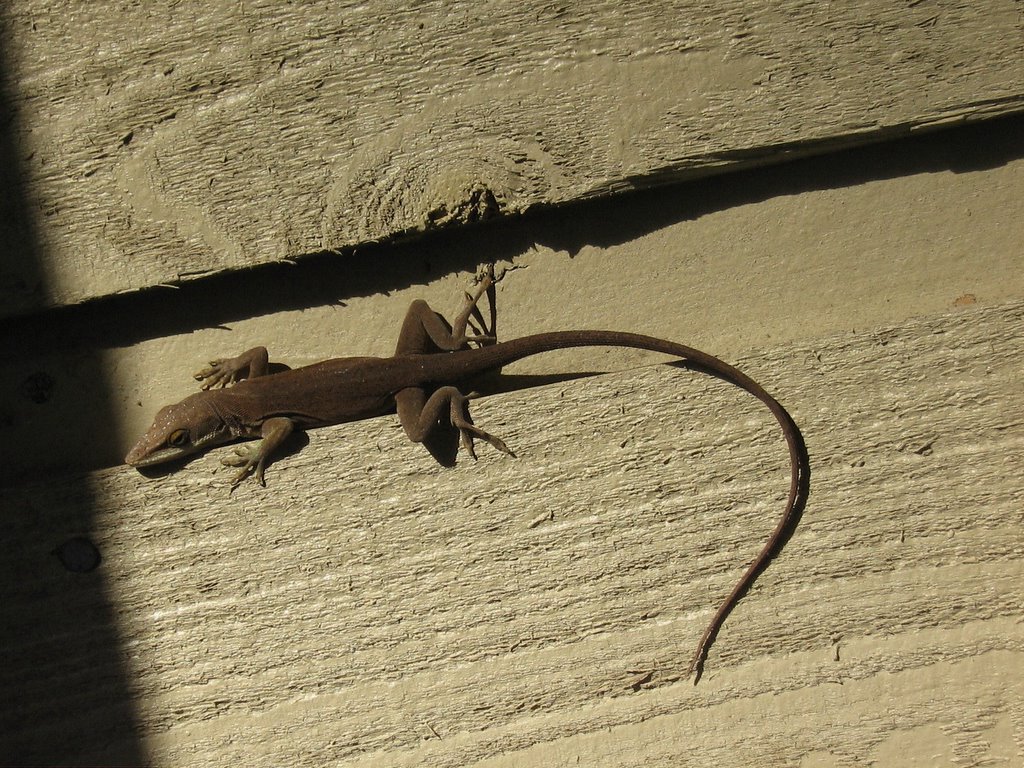
Here is a photo of a Carolina Anole, and this one is full grown. To see more on Carolina Anoles, go to my previous post.

Lichen Bug 3


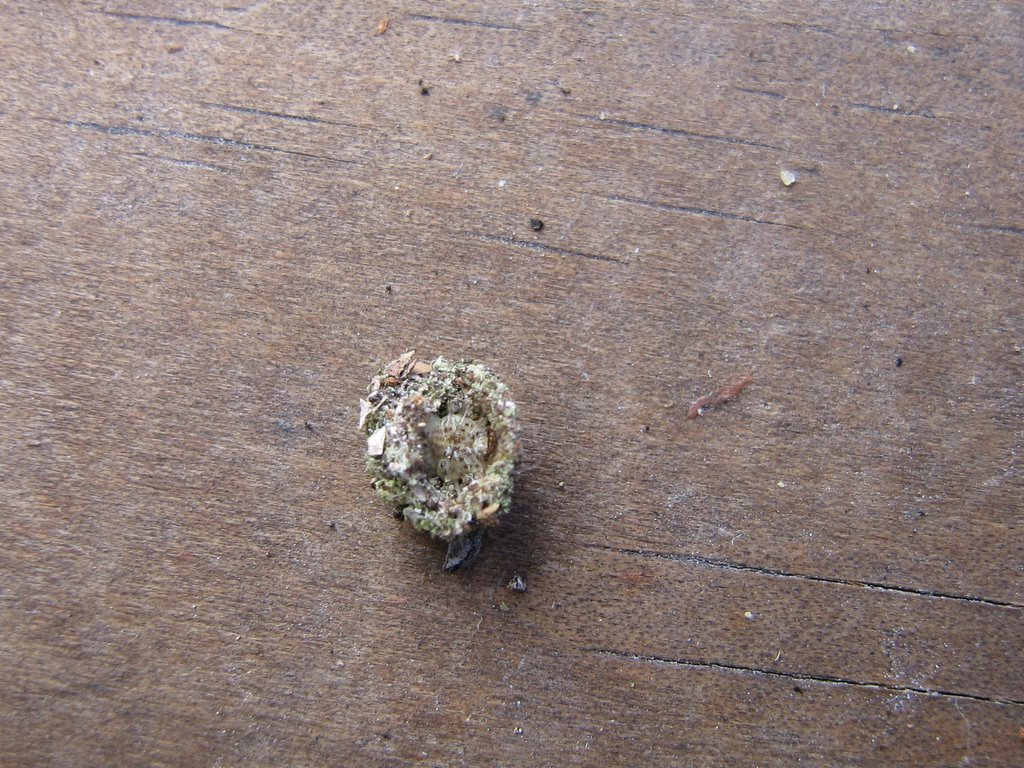
Here is yet another photo of the Green Lacewing larva, (see more below). If you click on it to enlarge it, and look really closely at it, you can see its little feet.